
Causes of infertility
Discover the possible obstacles to conception and explore your options for diagnosis and treatment
Infertility is defined as the inability to conceive, carry, and deliver a child. A couple is considered infertile if:
- The woman is under 35 and has not become pregnant after 12 months of regular, unprotected intercourse.
- The woman is over 35 and has not become pregnant after 6 months, due to the natural decline in fertility with age.
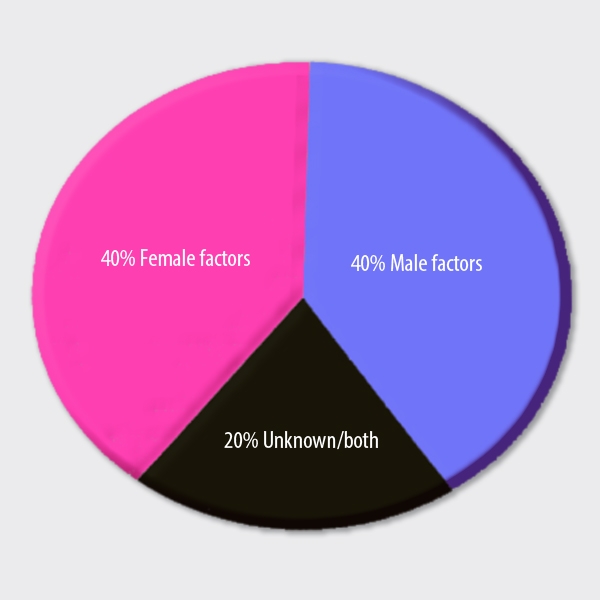
What are the causes?
Female factors – around 40% of cases.
Possible causes include:
- Ovarian issues (e.g., Polycystic Ovary Syndrome – PCOS, premature ovarian insufficiency)
- Tubal damage (e.g., blocked fallopian tubes)
- Uterine conditions (e.g., endometriosis, fibroids)
- Cervical factors
Male factors – also about 40%.
Common reasons include:
- Impaired spermatogenesis or issues with sperm delivery
- Genetic factors, infections, trauma, medications, and lifestyle
Combined or unexplained factors – remaining 20% of cases:
This includes a combination of issues in both partners or idiopathic infertility (when no clear cause is found).
What comes next?
A thorough fertility assessment of both partners is essential in determining the best course of treatment.
In cases of unexplained infertility, possible approaches include:
- Lifestyle changes and natural timing methods
- Controlled ovarian hyperstimulation (COH)
- Intrauterine insemination (IUI)
- In vitro fertilization (IVF) and Intracytoplasmic Sperm Injection (ICSI) – the most effective, yet more resource-intensive options
Infertility is not a sentence – modern reproductive medicine offers personalized solutions, even in the most complex cases.