
Controlled ovarian hyperstimulation (COH)
The first step toward increasing the chances of a successful pregnancy.
Controlled ovarian hyperstimulation (COH) is a key component of most assisted reproductive procedures, including in vitro fertilization (IVF). Its goal is to stimulate the ovaries to produce more than the one or two eggs that typically mature during natural ovulation. This increases the number of mature eggs available, thereby improving the chances of successful fertilization and pregnancy.
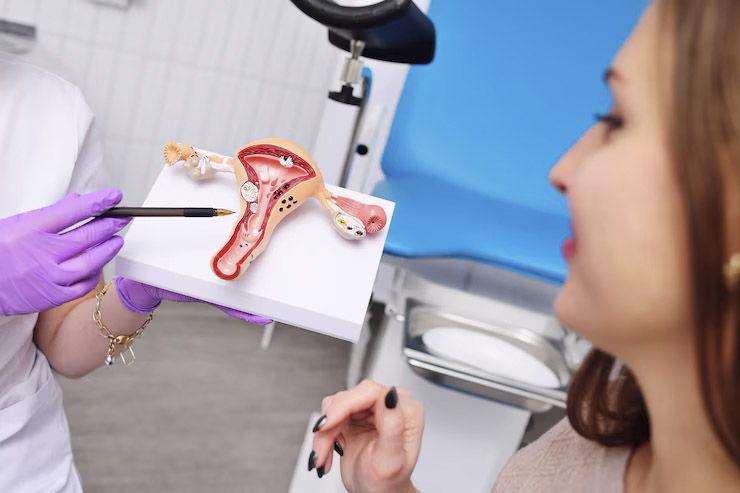
If your menstrual cycle is irregular, oral contraceptives may be prescribed in advance for a period of about one month. This helps synchronize ovarian activity and optimizes the timing for starting stimulation.
During controlled ovarian hyperstimulation (COH), hormonal medications are administered during a specifically defined timeframe. The dosage and duration are individually tailored—depending on your age, ovarian reserve, and overall health condition.
Once therapy begins, our team of specialists will closely monitor the growth and maturation of the follicles through ultrasound examinations—a process known as folliculometry. This allows us to determine the most appropriate time for the next step: ovarian puncture and egg retrieval.
Next step: ovarian follicle aspiration
What medications are used during controlled ovarian hyperstimulation (COH)?
Fertility-stimulating medications are used to induce the maturation and ovulation of multiple eggs (oocytes). They are administered to women with ovulation issues or those undergoing assisted reproductive procedures such as in vitro fertilization (IVF).
Although these medications are available under various brand names, they contain one or more of the following active substances (or their synthetic analogs):
Clomiphene citrate
Known by the brand names Clomid or Clostilbegyt, this medication is taken orally. It stimulates the pituitary gland to produce follicle-stimulating hormone (FSH), which is essential for the development and maturation of eggs prior to ovulation.
Gonadotropins (FSH and LH)
Injectable hormones that act directly on the ovaries:
- FSH (follicle-stimulating hormone) – stimulates the growth of ovarian follicles.
- LH (luteinizing hormone) – at high doses, induces ovulation, i.e., the release of mature eggs from the follicles.
Human chorionic gonadotropin (hCG)
An injectable hormone whose effect mimics that of LH. It is used to induce ovulation and support the maturation of eggs.
The advantage of hCG is that it acts longer in the body than natural LH, making it more effective under controlled conditions. Additionally, it helps thicken the endometrium (the lining of the uterus), which is crucial for embryo implantation.
Progesterone
A female sex hormone essential for:
- Maintaining the thickness and quality of the uterine lining
- Preparing the uterus for implantation
- Supporting early pregnancy
After follicle puncture (egg retrieval), additional progesterone supplementation is usually prescribed in the form of vaginal suppositories, tablets, or injections. It may also be prescribed to women with a history of miscarriage.