
Embryo transfer in IVF
The final and most delicate step in the IVF procedure.
After the fertilization of the eggs in laboratory conditions, the resulting embryos are cultured in a special nutrient medium for a period of 2 to 6 days. Once they reach an appropriate stage of development, they are ready to be transferred into the patient’s uterus—a procedure known as embryo transfer (ET).
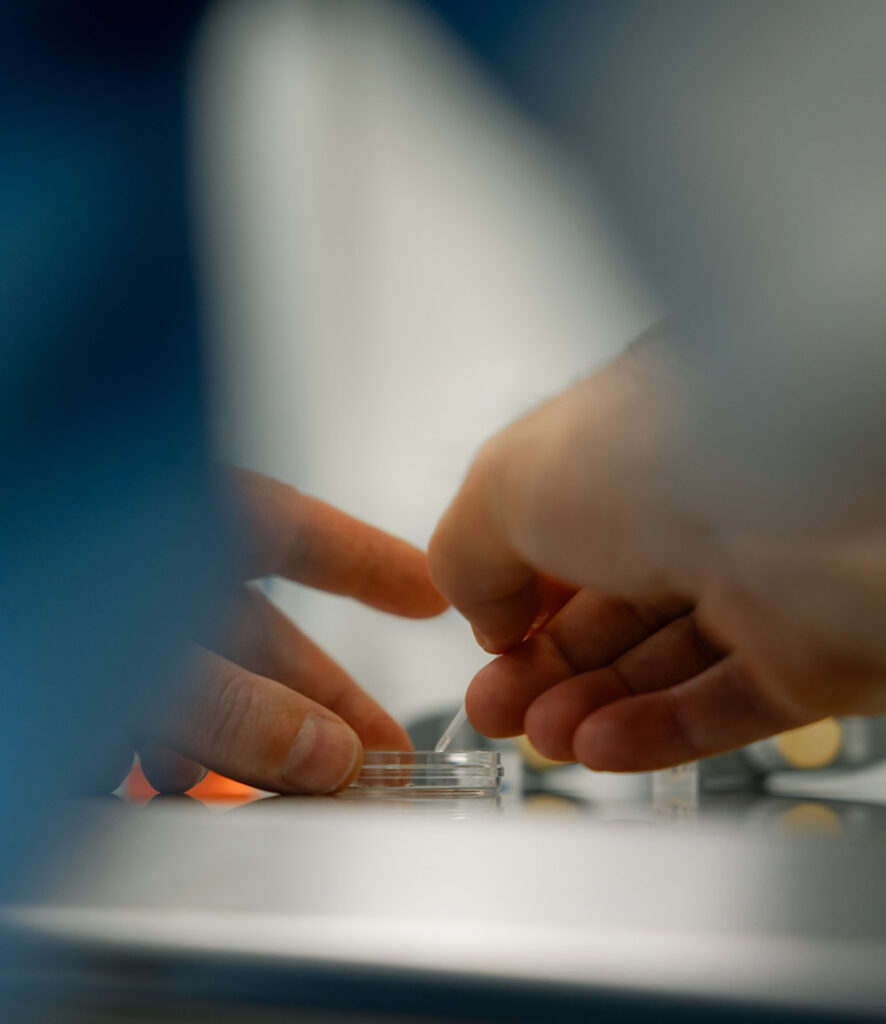
How does embryo transfer take place?
Embryologists select the highest quality embryos, and the number of embryos to be transferred—usually between 1 and 3—is determined based on the patient’s age and medical history. During the procedure:
- A speculum is inserted into the vagina to visualize and clean the cervix.
- After confirming the patient’s identity, the embryologist loads the embryos into a thin catheter and hands it to the obstetrician-gynecologist.
- Under ultrasound guidance, the catheter is carefully inserted through the cervical canal into the uterine cavity.
- Once in the optimal position, the embryos are gently deposited, and the catheter is withdrawn.
- The embryologist checks the catheter to ensure that all embryos have been successfully transferred.
The procedure is painless and does not require anesthesia. After the transfer, the patient rests briefly, followed by a monitoring period and prescribed medication to support embryo implantation.