
In vitro fertilization – IVF
A standardized procedure to achieve pregnancy in cases of reproductive difficulties
Conventional in vitro fertilization (IVF) involves incubating mature eggs and sperm together in a shared laboratory environment (Petri dish) to achieve fertilization. The success of the procedure depends on the number of mature eggs retrieved, which is why most patients undergo controlled ovarian hyperstimulation (COH). This therapy stimulates the maturation of a significantly higher number of eggs than in a natural ovulation cycle.
During COH, the obstetrician-gynecologist monitors follicle growth through ultrasound and determines the exact timing for the injection of Pregnyl—a medication that triggers ovulation. The ovarian follicle puncture is performed between 34 and 36 hours after the injection.
On the day of the puncture, the patient’s partner must provide a semen sample for fertilization of the retrieved eggs. If this is not possible, a previously frozen sample can be used.
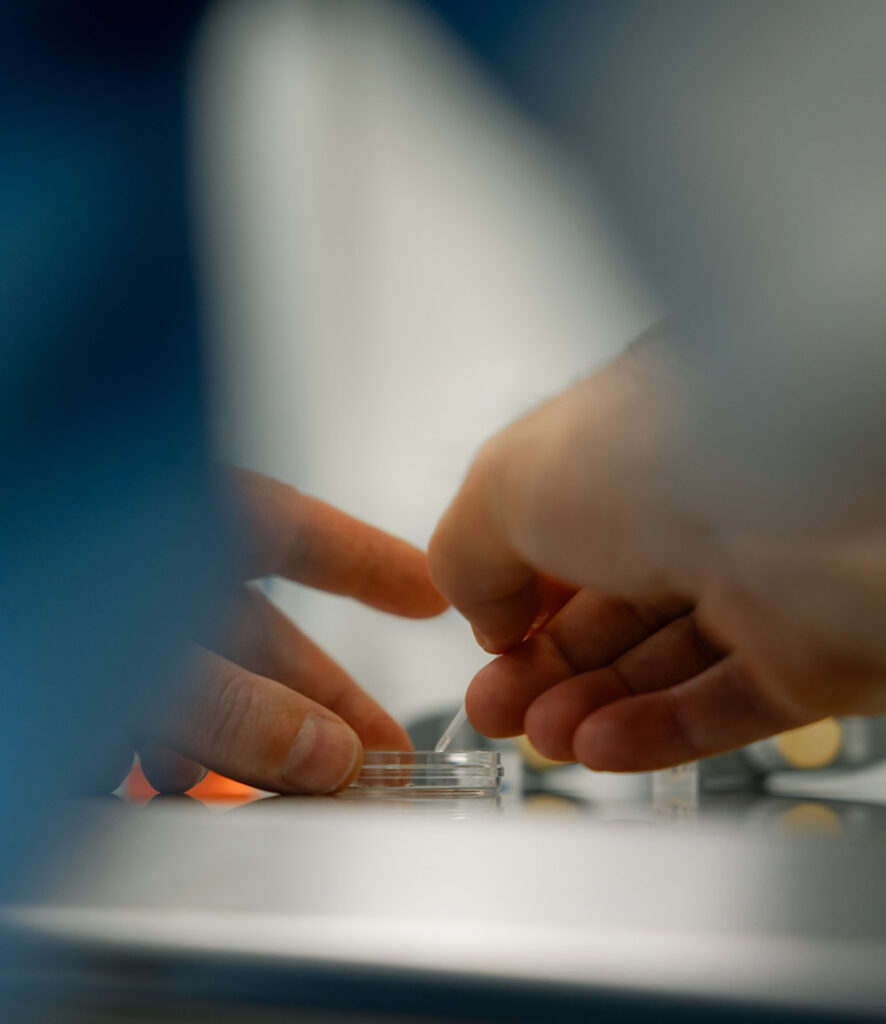
After isolating the eggs and processing the semen sample, they are incubated for about 18 hours in a laboratory environment. After this period, fertilization is checked under a microscope. The fertilized eggs—embryos—are cultured under strictly controlled conditions until the time of transfer into the patient’s uterus.
Embryologists monitor and evaluate embryo development daily according to international standards to select the highest quality embryos with the greatest implantation potential for transfer. If there is an excess of good-quality embryos, they can be frozen and used in future procedures.